
The internet has changed dramatically over the past decade, and 2026 is shaping up to be another big year for digital transformation. Websites are no longer just online brochures sitting quietly on the internet — they are dynamic, intelligent platforms that drive real business results. Today’s users expect fast load times, seamless navigation, tight security, and experiences that feel personal rather than generic.
For businesses across the country, keeping up with these shifts is not optional. In 2026, companies offering website development in Adelaide and across web development services Australia-wide are moving beyond the basics, focusing on smarter, future-ready solutions that help their clients compete, grow, and connect with customers in meaningful ways.
2. AI-Powered Website Experiences
Artificial intelligence has quietly become one of the most powerful tools in modern web development — and its impact is only growing. From intelligent chatbots that handle customer queries around the clock to personalised content that adapts based on a visitor’s behaviour, AI is reshaping how websites interact with people.
Here is what AI-powered websites are doing in 2026:
- Smart chatbots that handle FAQs, bookings, and complaints without human intervention
- Personalised content engines that show relevant products or articles based on browsing history
- Automated customer support that reduces response times from hours to seconds
- Smart product or service recommendations that increase average order value
For businesses, the benefits are tangible. Better engagement, faster response times, and higher conversion rates are just the beginning. A reputable software development firm can integrate AI tools directly into your website without making the experience feel robotic or impersonal — the key is using AI to support people, not replace the human touch entirely. Many web development services Australia providers are already helping clients implement these features as a standard part of their builds.
3. Mobile-First Website Development
Take a look at your own browsing habits. Chances are, you spend more time on your phone than on a desktop or laptop. Your customers are doing the same. In 2026, more than 60% of all web traffic comes from smartphones — and that number continues to climb.
Google has been prioritising mobile-friendly websites in its search rankings for years now, and that policy has only become stricter. If your website does not perform well on a small screen, you are not just losing potential customers — you are also losing ground in search results.
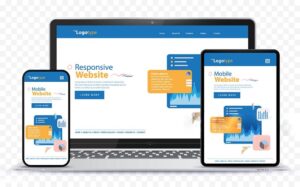
Website development in Adelaide and beyond now starts with mobile design first, then scales up to desktop — not the other way around. This approach, known as mobile-first design, ensures:
- Pages load quickly on 4G and 5G networks
- Buttons and menus are easy to tap on touchscreens
- Content is readable without zooming or horizontal scrolling
- Images and layouts adjust fluidly across all screen sizes
The payoff is a better user experience, lower bounce rates, and stronger SEO performance across the board.
4. Faster Websites & Core Web Vitals
Speed is not just a technical nicety — it directly affects your bottom line. Studies consistently show that users abandon a website if it takes more than three seconds to load. For e-commerce businesses, even a one-second delay can result in a significant drop in conversions.
Google’s Core Web Vitals — a set of performance metrics covering loading speed, interactivity, and visual stability — have become a key ranking factor. If your website scores poorly, it will struggle to appear at the top of search results, no matter how good your content is.
Modern web development services Australia providers focus heavily on performance optimisation, which includes:
- Image compression and next-gen formats like WebP to reduce file sizes without sacrificing quality
- Lightweight, clean code that browsers can render quickly
- Content delivery networks (CDNs) that serve your website from servers closest to the user
- Fast, reliable hosting on modern infrastructure
- Lazy loading so images and videos only load when a user scrolls to them
A fast website is not just a technical achievement — it is a competitive advantage.
5. Voice Search Optimisation
“Hey Siri, find a web developer near me.” That kind of search is happening millions of times a day. Voice assistants — including Siri, Google Assistant, and Alexa — have become a standard part of how people find information and services online.
Voice searches differ from typed searches in one important way: they are conversational. Instead of typing “website developer Adelaide,” a user might ask, “Who are the best website developers in Adelaide for small businesses?”
To show up in these results, businesses need to rethink how their content is written. This means:
- Conversational language that mirrors how people actually speak
- FAQ sections that directly answer common questions in plain English
- Structured data markup that helps search engines understand your content
- Fast mobile performance, since most voice searches happen on phones
Voice-friendly websites do not just help with SEO — they also improve accessibility and make your content easier to understand for all kinds of visitors.
6. Advanced Website Security
Cybersecurity is no longer an afterthought reserved for banks and large corporations. Every business website — regardless of size or industry — is a potential target. In 2026, data breaches, phishing attacks, and malware infections are more common than ever, and the consequences can be severe: lost customer trust, regulatory fines, and significant downtime.
The good news is that proactive security measures are well within reach for any business. A professional software development firm will typically include the following as standard practice:
- SSL certificates to encrypt data transmitted between your website and its visitors
- Multi-factor authentication (MFA) to protect admin access
- Secure payment gateways that comply with PCI-DSS standards
- Regular software and plugin updates to close known vulnerabilities
- Malware scanning and firewall protection to catch threats before they cause damage
Working with experienced developers means your security setup is not just a checkbox — it is an ongoing, maintained layer of protection that grows with your business.
7. Progressive Web Apps (PWAs)
Progressive Web Apps sit in an interesting space between a website and a mobile app — and they offer the best of both worlds. A PWA looks and feels like a native app on your phone, but it runs entirely through a web browser. No app store downloads required.
For users, the experience is noticeably better:
- Pages load almost instantly, even on slower connections.
- The website can work offline or with limited connectivity.
- Push notifications keep customers engaged after they leave the site.
- The experience feels smooth and responsive, much like a dedicated app.
For businesses, PWAs are cost-effective. Rather than building and maintaining separate iOS and Android apps alongside a website, a single PWA covers all bases. E-commerce stores, service booking platforms, and media sites are already seeing strong results with this approach. As the technology matures, expect PWAs to become a default consideration for any serious website build.
8. Minimal & User-Friendly Design
There was a time when websites tried to impress visitors with flashy animations, dense text, and busy layouts. Today, the opposite approach wins. Clean, minimal design has become the gold standard because it respects the user’s time and attention.
In 2026, the most effective websites share a few common traits:
- Clear, uncluttered layouts that guide the eye naturally
- Intuitive navigation so visitors find what they need in two or three clicks
- Generous white space that makes content easier to read
- Consistent visual hierarchy using typography and colour to establish importance
- Simple user journeys with clear calls to action at every step
Good UI/UX design is not just about aesthetics — it directly affects trust and conversions. A visitor who lands on a confusing or cluttered page will leave. A visitor who lands on a clean, purposeful layout is far more likely to stay, explore, and convert into a customer.
9. Integration of Custom Software Solutions
A website in 2026 is rarely a standalone entity. The most effective business websites are connected to a broader ecosystem of tools and systems that keep operations running smoothly.
Businesses are increasingly integrating:
- CRM systems (like Salesforce or HubSpot) to manage customer relationships and track leads
- Online booking and scheduling tools that sync in real time
- Inventory and e-commerce management systems for product-based businesses
- Customer dashboards where clients can log in, track orders, or access documents
- Marketing automation tools that trigger emails or messages based on user behaviour
A skilled software development firm can build these integrations cleanly, so your website and your internal tools work as one unified system. The result is less manual admin, fewer errors, and a much better experience for both your team and your customers.
10. Why Businesses Must Adapt to These Trends
The digital landscape does not wait for anyone. Businesses that continue to rely on outdated websites — slow loading, poor mobile performance, no security measures, no integrations — are quietly falling behind, often without realising it.
The consequences are real:
- Lower Google rankings as competitors with faster, better-optimised sites move ahead
- Higher bounce rates as frustrated users leave before your page finishes loading
- Lost conversions from visitors who do not trust an insecure or outdated site
- Missed opportunities from customers who found a competitor’s website easier to use
Partnering with experienced web development services Australia providers gives businesses a clear path forward. The right team will assess your current digital presence, identify gaps, and build solutions that are not just modern today — but scalable for the years ahead.
Conclusion
Website development is evolving faster than most businesses can comfortably track. Speed, security, mobile optimisation, AI integration, and thoughtful design are no longer premium extras — they are the baseline expectations of modern users and search engines alike.
The businesses that invest in future-ready websites in 2026 will be the ones that build lasting trust, attract more organic traffic, and convert visitors into loyal customers. Those that delay will find the gap harder to close with each passing year.
Whether you are upgrading an existing website or starting fresh, working with an experienced software development firm can help your business stay ahead in an increasingly competitive digital world. The right partner does not just build you a website — they build you a platform for growth.
Ready to future-proof your online presence? Start the conversation with a web development team that understands what businesses need in 2026 and beyond.