Insights
Moving Off Spreadsheets: An ERP and MES Guide for SA Manufacturers.
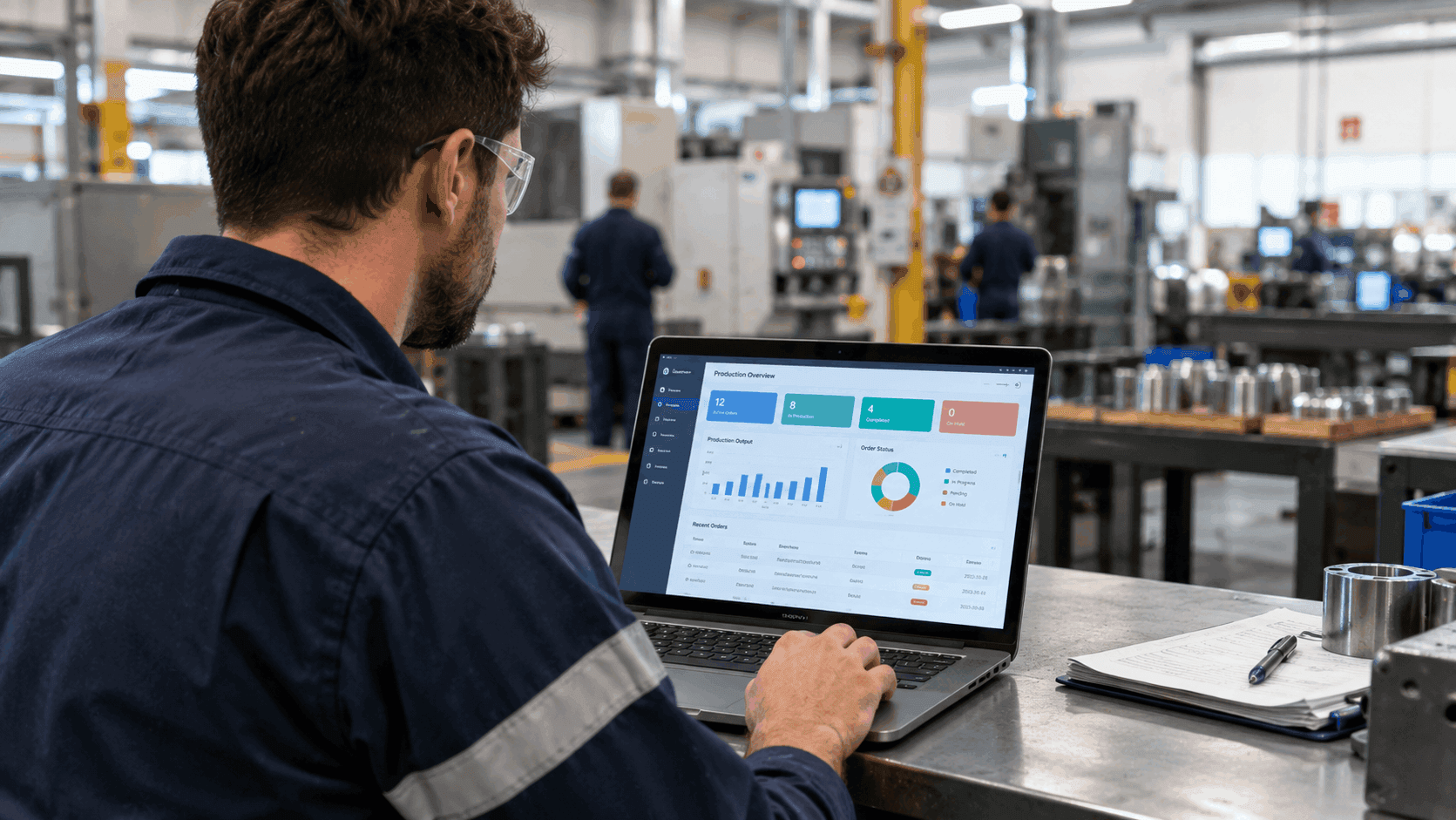
Walk into many small and mid-sized factories across Adelaide and regional South Australia, and you will find the business running on spreadsheets. One file for orders, another for stock, a whiteboard for the production schedule, and a few people who "just know" where everything is. It works, until it doesn't. A wrong cell overwrites a recipe, a customer asks for batch traceability you can't produce quickly, or the person who built the master spreadsheet goes on leave.
For SA manufacturers, moving from spreadsheets to an ERP (enterprise resource planning) system and, on the floor, an MES (manufacturing execution system) is one of the most practical digital transformation steps available. Here is how to approach it without disrupting production, and the South Australian support you can lean on along the way.
Signs Your Spreadsheets Have Hit Their Limit
Spreadsheets can be useful when a business is small, but managing growing manufacturing operations through disconnected files can create avoidable problems.
Common signs that your current approach needs to change include:
Several versions of the truth: Sales, production and accounts each keep their own file, and the numbers rarely match.
Stock surprises: Raw materials run out mid-run, or you over-order because nobody trusts the count.
Slow traceability: Pulling together batch, supplier and dispatch records for an audit or recall takes hours, not minutes.
Manual re-keying: Orders are typed into a spreadsheet, then into accounting software, then onto a job sheet.
No real-time view of the floor: You only find out how a shift went after it ends.
If three or more of these sound familiar, it is time to plan how to replace spreadsheets in manufacturing with systems that provide better visibility and control.
ERP and MES: What Each One Does
ERP and MES systems serve different but complementary purposes. Understanding their roles helps manufacturers decide where to start and how to connect business operations with the factory floor.
What Is ERP for SA Manufacturers?
An ERP system looks after the business side: customer orders, purchasing, inventory, costing, and links to finance.
For ERP for SA manufacturers, the goal is to bring essential business information together so teams can work from consistent data rather than maintaining separate spreadsheets for every function.
What Is MES in South Australia?
An MES looks after the factory floor: work orders, machine and line status, operator data capture, quality checks and batch records.
For manufacturers exploring MES in South Australia, the system can help connect production activities with the information used by the wider business.
For a small manufacturer, you may start with an ERP and add MES functions later, or start with simple digital job tracking on the floor and connect it to your ERP over time.
The key is that both share the same data, so an order placed in the office flows to the line and back again without anyone re-typing it.
A Step-by-Step Approach for SA Manufacturers
Moving away from spreadsheets does not have to mean replacing every system at once. A structured approach helps manufacturers improve operations while keeping production running.
1. Map How Work Really Flows Today
Follow one order from enquiry to dispatch and list every spreadsheet, form and handover it touches.
This helps identify where information is duplicated, where delays occur and which processes depend on manual updates.
2. Pick the Pain Point That Costs the Most
Usually, this is stock accuracy, scheduling or traceability. Make that the first milestone rather than trying to digitise everything at once.
Starting with one clearly defined problem makes it easier to measure progress and demonstrate the value of the new system.
3. Clean Your Master Data
Review product codes, bills of materials, recipes, suppliers and customers.
Messy data moved into a new system is still messy data, so preparing your information before implementation is an important step.
4. Choose Systems That Fit Your Size
Look for software that matches how you make things, whether through batch production, a job shop or repetitive manufacturing. Make sure it integrates with your accounting package and can grow with you.
Choosing Adelaide manufacturing software that fits your actual production processes helps avoid unnecessary complexity and supports future expansion.
5. Run in Parallel, Then Switch
Keep the spreadsheet as a backup for a short period while the team builds confidence in the new system.
Plan the transition carefully so staff can check information and resolve issues before relying entirely on the new process.
6. Involve Operators Early
The people on the floor will be entering the data. Simple screens, short training and a clear understanding of why the change matters can make or break adoption.
Involving operators early also helps identify practical issues before they affect production.
7. Measure the Gains
Track stock accuracy, on-time delivery, time spent on administration and traceability response times before and after implementation.
These measures help determine whether the new system is delivering the improvements your business needs.
South Australian Support You Can Use
You don't have to work this out alone. Local programs can help you plan and de-risk the move towards digital manufacturing.
Manufacturing Growth Accelerator (MGA)
The Manufacturing Growth Accelerator is a South Australian Government initiative from the Department of State Development, delivered with Flinders University at the Factory of the Future in the Tonsley Innovation District.
Eligible SMEs can take part through information sessions, bespoke accelerator projects and Industry 4.0 assessments.
In May 2026, the Department of State Development reported that the $4 million program had supported more than 260 South Australian companies to adopt new technology.
Digital Solutions at Adelaide Business Hub
Round 3 of the Australian Government-funded Digital Solutions program is open to for-profit businesses throughout South Australia with an active ABN and fewer than 20 staff, or sole traders.
It offers five hours of one-on-one expert mentoring for $110, plus free workshops, webinars and tutorials, with using business software among its priority topics.
Manufacturing Technology Adoption Program (MTAP)
The Department of State Development's Manufacturing Technology Adoption Program has offered South Australian SMEs up to $50,000 in matched funding for Industry 4.0 technologies such as AI, data analytics and the Industrial Internet of Things.
Round 2 applications are closed, so it is worth watching the program page for any future rounds while you plan.
These initiatives can help businesses investigate digital technology options and develop a more structured approach to SA manufacturers' digital transformation.
How an Adelaide Team Like StepSharp Can Help
StepSharp is an Adelaide-based team that helps South Australian manufacturers, including food manufacturers, implement ERP, MES, IoT and AI.
We usually start by mapping how work flows today and picking the one improvement that will pay back fastest, then build from there so production keeps running while the systems change.
If you are working with a local program such as the Manufacturing Growth Accelerator or Digital Solutions, we are happy to fit in alongside that advice.
For manufacturers considering Industry 4.0 in Adelaide, a practical starting point is to identify the operational problem, select the right technology and introduce improvements in manageable stages.
Next Steps for SA Manufacturers
If your business still relies on spreadsheets to manage important manufacturing processes, you can start planning the transition with a few practical actions:
Follow one order through your business this week and count the spreadsheets it touches.
Read about the Manufacturing Growth Accelerator and ask about an Industry 4.0 assessment.
If you have fewer than 20 staff, check the Digital Solutions program for low-cost mentoring.
Spreadsheets got many SA manufacturers this far. The right ERP and MES setup is what gets them to the next stage of growth.