
Insights
Cutting Food Waste with Data and AI Forecasting: A Guide for SA Food Manufacturers.
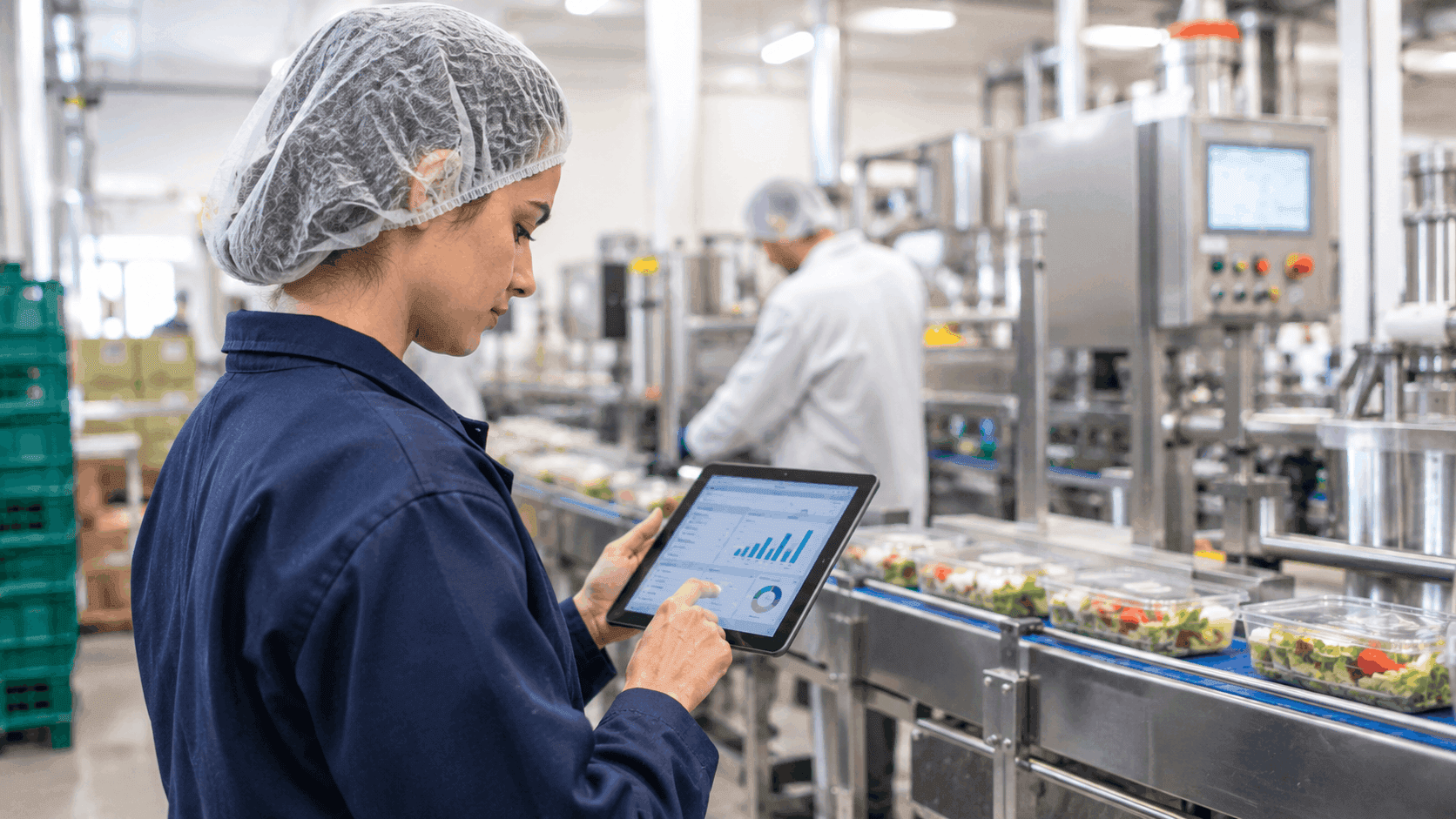
Every tray of product that misses spec, every batch made for orders that never arrived and every pallet that ages out in the cool room is money leaving a South Australian food business.
Food waste is now one of the most practical places for SA food manufacturers to find savings, and Adelaide happens to be home to some of the best support in the country for doing something about it.
This guide looks at why food loss matters for SA manufacturers right now, how data and AI forecasting can help, and the local programs that can support you.
Why Food Waste Is a Hot Topic in South Australia
Green Industries SA (GISA) notes that auditing data shows roughly 85,000 tonnes of food waste is still sent to landfill each year by South Australian businesses. Reducing and diverting that waste is a state priority under Valuing our Food Waste, South Australia's strategy to reduce and divert household and business food waste.
Nationally, End Food Waste Australia, which is headquartered at the Waite Campus in Urrbrae, reports that about 17% of food in the manufacturing stage, or 1.3 million tonnes, is lost each year.
Its Australian Food Pact signatories cut food waste by 13% against 2022 levels while handling 19% more food, and saved a collective $57 million in 2023 by doing so.
The message is clear. Waste reduction is not just an environmental goal; it is a productivity and margin opportunity for businesses involved in Adelaide food manufacturing and across South Australia.
Where Food Loss Hides on a Production Line
Most SA food manufacturers know their waste is "somewhere", but few can say exactly where. Common hotspots include:
Over-production: When production plans are built on gut feel or last year's numbers rather than live orders and demand signals.
Start-up, changeover and clean-down losses: Especially on lines running many short SKUs.
Out-of-spec product: From weight, seal, label or quality issues that are found too late.
Shelf-life write-offs: When stock rotation and dispatch planning can't see expiry dates clearly.
Raw material spoilage: From ordering more than the plan really needs.
Identifying these areas is an important first step towards food loss reduction. Better production data can help businesses understand where waste occurs and what changes are likely to make the biggest difference.
Step 1: Measure Before You Manage
You can't reduce what you don't measure.
Green Industries SA's food waste resources for businesses recommend starting by quantifying waste, for example with a week-long bin audit and GISA's food waste review tool.
For a manufacturer, the next level is to capture waste digitally at the point it happens: scrap and rework recorded against the line, shift, product and reason code in your MES or production system, rather than on a clipboard that ends up in a spreadsheet days later.
Once waste is linked to batches and reasons, patterns become visible very quickly.
Step 2: Plan Production Using Better Forecasts
Over-production is often the single biggest controllable loss.
Modern ERP and planning tools can combine sales history, customer orders, promotions, seasonality and even weather to produce more accurate demand forecasts.
AI and machine-learning models can improve on this by learning from your own data, flagging likely over-runs before they happen and suggesting batch sizes that match real demand.
AI demand forecasting can help manufacturers make more informed production decisions by identifying patterns in demand and reducing the risk of making more product than customers need.
Better forecasts flow straight through to raw material ordering, labour planning and cool-room space, so the benefit is felt across the whole site.
Step 3: Catch Quality Issues Early
Inline checks such as checkweighers, vision systems and sensors that feed results to a dashboard in real time help teams stop a drifting process in minutes rather than finding a full shift of rejects at the end of the day.
Capturing quality information as production happens also makes it easier to identify recurring issues and understand where process improvements are needed.
Step 4: Find a Higher-Value Use for Unavoidable Surplus
Some surplus is inevitable.
GISA's guidance points businesses to food rescue organisations operating in South Australia, including OzHarvest, SecondBite and Foodbank, then to animal feed options (which must comply with the Livestock Act 1997), and finally to organics collection for composting.
Good data makes these arrangements easier because you know what surplus to expect and when.
These options also support circular economy South Australia initiatives by helping businesses divert unavoidable food waste from landfill and make better use of available resources.
SA Support You Can Tap Into
South Australian food manufacturers have access to local programs and industry initiatives that can help them reduce waste, improve resource efficiency and explore better production practices.
1. Green Industries SA Business Sustainability Program
The Green Industries SA Business Sustainability Program provides free advice, tools and guidance on waste management, resource efficiency and circular economy practices, plus help with project scoping and grant eligibility.
2. GISA Business Sustainability Funding
GISA Business Sustainability funding includes Assess-Implement-Monitor (AIM) grants that co-fund independent experts to assess current practice and build a business case for improvement.
Check the page for current amounts and whether applications are open.
3. End Food Waste Australia Membership
End Food Waste Australia membership launched on 28 October 2026, with Associate Membership for small businesses and Full Membership packages that can include on-site sprints, site food loss mapping, advanced forecasting and joint business planning.
4. The BEACON Project
The BEACON project is a feasibility study running from August 2026 to August 2027, led by Adelaide University with Food South Australia.
It explores a shared manufacturing hub that would help SA food SMEs reduce waste and turn by-products into new products.
How StepSharp Helps Food Manufacturers Reduce Waste
Reducing food waste requires more than identifying what gets thrown away. Manufacturers need to connect waste records with production schedules, quality checks, inventory and customer demand to understand why losses occur.
StepSharp helps food manufacturers bring these operational details together through practical ERP, MES, IoT and AI solutions.
We can help your business:
Track waste at its source: Capture scrap, rework and production losses against specific products, batches, lines and shifts.
Improve production planning: Connect order and inventory information to production schedules to help avoid unnecessary over-production.
Make better use of forecasting: Use available business data to support more accurate demand planning and production decisions.
Improve quality visibility: Connect production checks and sensor data to help teams identify issues earlier.
Turn information into action: Bring production and waste data into dashboards that help managers identify recurring losses and measure improvements.
If you're already considering a GISA assessment or exploring an End Food Waste Australia program, StepSharp can help with the technology and data systems needed to put recommendations into practice.
Talk to StepSharp about practical ways to improve production visibility, reduce avoidable waste and make better use of your manufacturing data.
Next Steps for SA Food Manufacturers
Getting started with food loss reduction doesn't have to involve a major technology investment. A few practical steps can help identify where improvements are possible:
Run a simple waste audit using GISA's tools.
Start recording scrap and rework with reason codes against each line and shift.
Review how your production plan is built and where forecasting could help.
Talk to GISA's Business Sustainability Program about advice and funding options.
Small, data-driven changes add up quickly, and South Australian food manufacturers have strong local support to make them.