Insights
MLA's Transitioning to Digital Consignments (eNVD) Call for Projects: What Red Meat Supply Chain Businesses Need to Know.
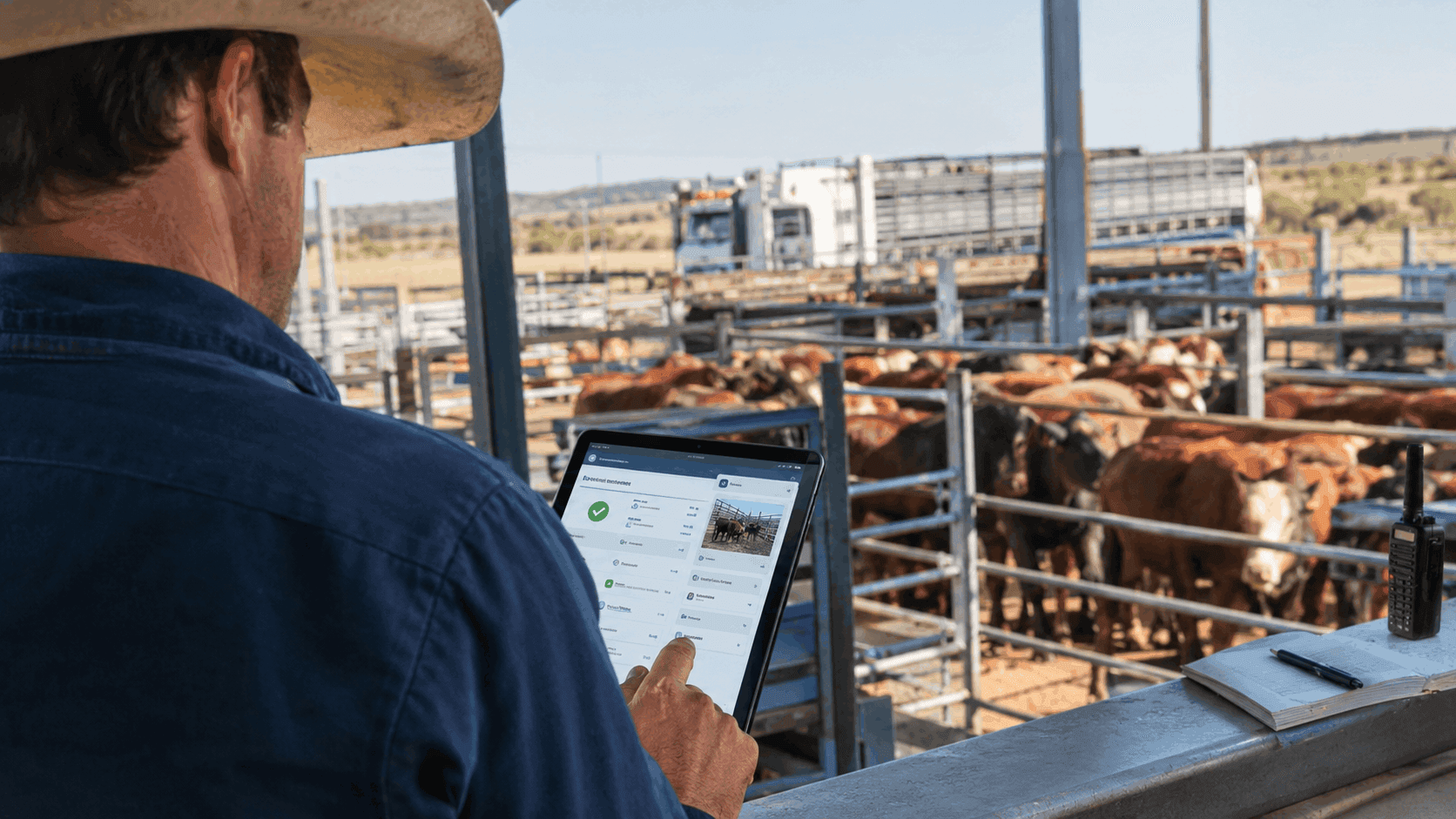
Paper National Vendor Declarations still slow down livestock receivals across Australia. Meat & Livestock Australia (MLA) wants to change that, and it is co-funding projects that help supply chain businesses move to electronic NVDs (eNVDs) and, ultimately, paperless livestock consignments.
Applications for the eNVD call for projects close at 5:00pm AEDT on Friday 30 October 2026 (4:30pm in Adelaide), so there is very little time to put a proposal together.
Read the official details on the MLA Current Tenders page, under Transitioning to Digital Consignments (eNVD), including the call document linked from that page.
What Is the Transitioning to Digital Consignments Call for Projects?
The opportunity is offered by Meat & Livestock Australia through the MLA Donor Company (MDC).
In MLA's words, it is "a co-funding opportunity to support value chain stakeholders such as processors, livestock agencies, saleyards, transporters, integrated companies and their supply chain, including software providers, shift towards digital NVDs."
MLA points to the problems with paper NVDs: forms that get lost, are outdated, incomplete or illegible, and make it hard to capture the data that underpins market access.
Electronic NVDs provide several benefits:
Give receivers such as processors, transporters, agents and saleyards consignment information before the livestock arrive.
Allow real-time corrections.
Remove manual and duplicate data entry.
Let data be used across multiple systems.
Reduce processing time.
The eNVD platform supports digital transfer of LPA NVDs, Meat Standards Australia (MSA) vendor declarations, National Health Declarations and National Feedlot Accreditation Scheme (NFAS) forms.
MLA also offers an eNVD API, supported by its eNVD developer portal and technical and operational support, so commercial systems can create and exchange eNVD information.
Who Can Apply for MLA eNVD Funding?
MLA is seeking proposals "from supply chain businesses who are interested in building the capability and capacity of their business and supply chain to fast-track implementation of digital consignments".
The call names the following businesses and supply chain participants:
Saleyards
Feedlots
Processors
Agents
Transporters
Software providers and livestock suppliers supporting these businesses
The call document doesn't set a state, business size or turnover test. It asks for your ABN.
Every project must deliver an increase in the proportion of consignments that are digital.
How Much MLA Donor Company Co-Funding Is Available?
The MLA eNVD funding opportunity has the following funding conditions:
Funding amount: No minimum or maximum amount is stated. MLA says it may fund the amount it considers appropriate.
Co-contribution: "40% contribution by MDC and 60% contribution of funds by the applicants." MLA's guidelines say in-kind, or non-cash, funding is not to be included.
Access fee: 12%, or 8% for MLA levy payers, to cover project administration.
This MDC co-funding arrangement supports projects designed to increase the adoption of digital consignments across the red meat supply chain.
What Can the eNVD Call for Projects Funding Cover?
Projects can focus on whole-of-business uplift, such as software requirements, operating procedures and supplier change programs, or on individual components.
The call says the budget "cannot include funding for hardware purchases, but implementation and resourcing costs including software enhancements to facilitate eNVD adoption, can be included."
For businesses planning eNVD API integration, this may be relevant when scoping software enhancements and the work required to connect consignment data with existing business systems. Proposed activities must align with the call's requirements.
Important Project Timing Rule
MLA's guidelines say no work can start until an agreement and statement of work are signed, and work done before the contract won't be reimbursed.
Contracting can take up to 12 weeks from submission.
How Applications for MLA eNVD Funding Are Assessed
MLA will assess applications "primarily on a value for money basis", judged against the expected increase in eNVD uptake the project will deliver.
Partnerships with the supply chain to drive digital consignment uptake and practice change "will be favourably viewed".
MLA also considers:
Quality
Fitness for purpose
Experience and resources
Risk
The use of proposed subcontractors
Your proposal should clearly explain how the project will increase the proportion of digital consignments and deliver practical benefits for the participating supply chain businesses.
What You Will Need to Apply
Businesses preparing an application for the Transitioning to Digital Consignments opportunity will need the following documents.
1. Project Funding Application Form
Complete MLA's Project Funding Application Form (Detailed), in Word, including the budget worksheet and risk assessment.
2. Written Project Proposal
Prepare a written proposal covering:
Implementation approach
Objectives
Timeframes
Methodology and milestones
Key performance indicators
Detailed budget
Reporting and invoicing
3. Completed Call Document
Include a copy of the call document with Section 2 answered and Sections 5 to 7 completed. These sections include a witnessed declaration, governance disclosures and a Modern Slavery questionnaire.
How to Submit Your Application
Applications are lodged by email to the MLA contact named on the call page:
Contact: Renelle Jeffrey, Program Manager, Digital Adoption
Email: [email protected]
There is no online portal. Review the official MLA Current Tenders page for the call document and application requirements before submitting.
How StepSharp Helps Supply Chain Businesses Go Digital
StepSharp Digital is an Adelaide software, AI and automation company that implements AI, ERP, MES and IoT systems for growing businesses.
Moving to eNVDs is as much a systems job as a paperwork one: consignment data has to flow from the eNVD platform into your intake, livestock, production and ERP systems without being re-keyed.
We help processors, feedlots, saleyards and agents plan and build that digital side by:
Connecting to the eNVD API.
Bringing pre-arrival consignment data into existing systems.
Automating checks and exception alerts.
Setting up dashboards that track the share of digital consignments, the measure MLA scores on.
If you're preparing a proposal, talk to StepSharp about scoping the software and integration work.
Remember that the applicant remains responsible for the project, and subcontractors and suppliers must be listed in the application.
Key Takeaways
The Transitioning to Digital Consignments call offers red meat supply chain businesses an opportunity to work towards greater adoption of digital NVDs and paperless livestock consignments through co-funded projects.
Before applying for MLA eNVD funding, review the eligibility and funding conditions, prepare a detailed proposal, identify the expected increase in digital consignment uptake, and allow enough time for submission and contracting.
Important: This is general information based on MLA's published call page, call document and Project Funding Application Guidelines as at 21 October 2026. Decisions rest with Meat & Livestock Australia, so confirm details with MLA before applying.