Insights
IoT Energy Monitoring for SA Manufacturers: A Practical First Step.
By StepSharp Digital Technology
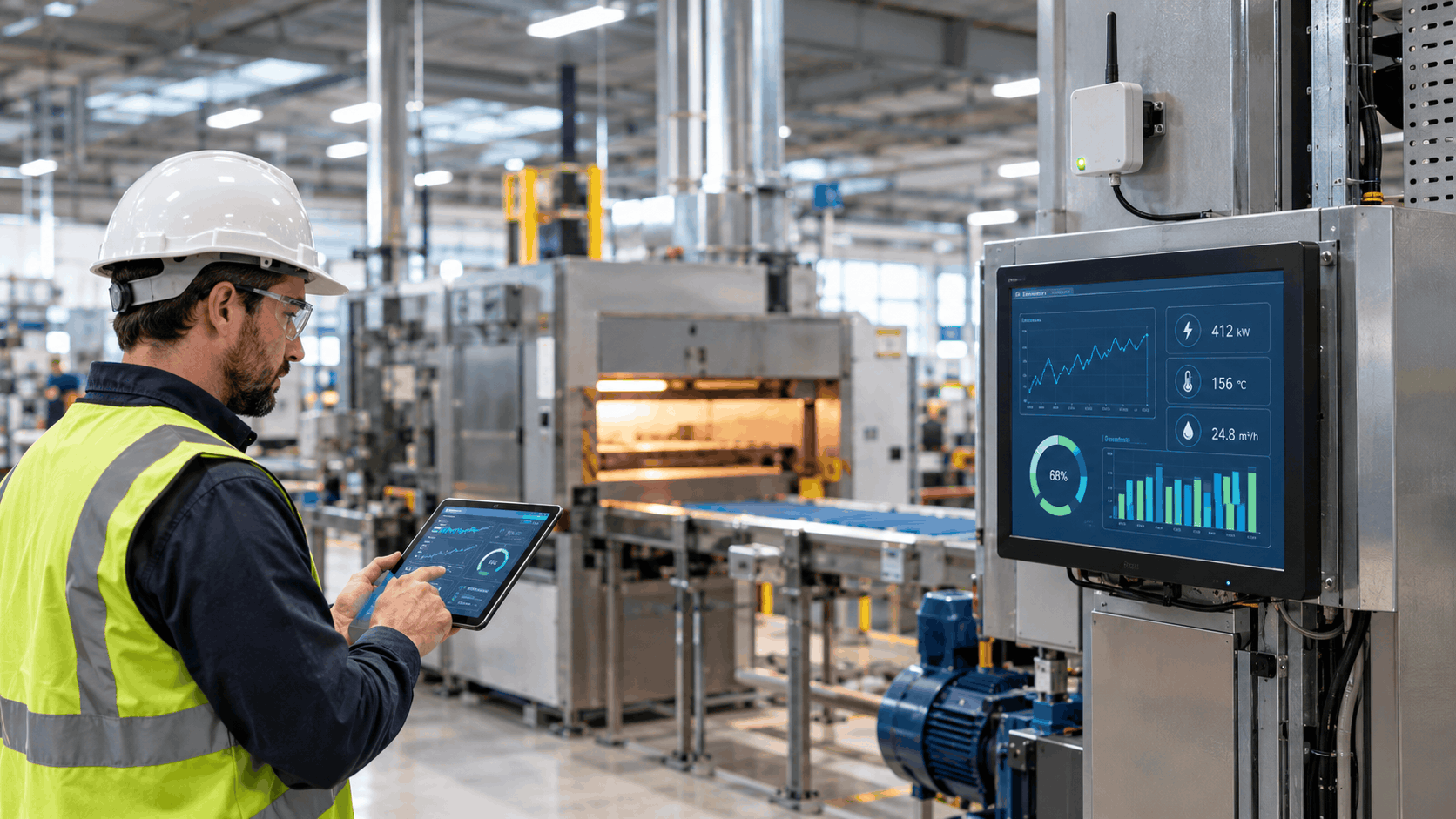
Many South Australian factories still find energy problems the hard way: a surprise power bill, an oven that runs hotter than it needs to, or a compressor that never seems to stop. You do not need a full smart-factory rebuild to start fixing that. A focused **IoT energy monitoring** project on one high-use process can show where waste is happening and give your team real numbers to act on.
South Australia already has a local proof point. In September 2025, the [Department of State Development](https://statedevelopment.sa.gov.au/) published how Adelaide composite manufacturer **Novafast** used Industry 4.0 technology for energy monitoring through the state’s [Manufacturing Growth Accelerator (MGA)](https://statedevelopment.sa.gov.au/manufacturing/manufacturing-growth-accelerator).
Energy is often one of the largest controllable costs on a manufacturing site, especially in food and beverage, composites, metals and thermal processes. Without meters on the process itself, teams usually only see the whole-site bill, so it is hard to tell which line drives peak load, whether temperature drifts overnight, or whether heat cycles run longer than the product needs.
IoT monitoring closes that gap. Sensors stream temperature, power draw or similar signals into a dashboard so teams can see patterns in near real time, not weeks later on an invoice.
According to the Department’s case study, [“Initiative helping local manufacturer adopt Industry 4.0 technology for energy monitoring”](https://statedevelopment.sa.gov.au/news/initiative-helping-local-manufacturer-adopt-industry-4-0-technology-for-energy-monitoring) (3 September 2025), Novafast makes composite piping systems for harsh environments — energy-intensive work.
Through MGA, Novafast joined the Connected Supplier project, which introduced six selected SA businesses to new technologies and helped them choose high-return data types. Novafast focused on **real-time temperature monitoring** on its most energy-intensive process so it could make informed efficiency changes.
David Figallo, Business & Strategy Manager at Novafast, called the project successful and stressed clarifying scope and business benefits early. The company also valued university integration, software and workshops, and saw room for a further energy-efficiency phase.
That is a useful template for other **SA manufacturers**: start with one process, pick data tied to cost or quality, then decide what to change.
You do not have to invent this alone. The [Manufacturing Growth Accelerator](https://statedevelopment.sa.gov.au/manufacturing/manufacturing-growth-accelerator) is a Department of State Development and Flinders University partnership at the [Flinders Factory of the Future](https://www.flinders.edu.au/factory-of-the-future) in the Tonsley Innovation District.
MGA helps SA SMEs adopt advanced manufacturing technologies by connecting them with researchers and industry. Eligible businesses can join information sessions, Industry 4.0 assessments and bespoke accelerator projects. Department priorities include sustainability and net-zero, worker-centric digital technologies, and digital-transformation skills.
Flinders invites SMEs to contact [[email protected]](mailto:[email protected]) or 08 7221 8038. The Department’s page also lists Andrew Richardson, Business Development Manager at Flinders Factory of the Future.
Grant rounds open and close. SA’s Powering Business Grants previously supported energy-efficiency upgrades, but that round’s applications have closed. Check [https://business.sa.gov.au/] for programs open now, and use measured process data so any future funding application is evidence-based.
If you run a plant in Adelaide or regional South Australia, a low-risk first pass looks like this:
1. Pick one energy-hungry asset — an oven, fryer, kiln, autoclave, chiller bank or large compressor is usually better than metering the whole site on day one.
2. Define the decision you want to make — shorten heat cycles without hurting quality, spot idle run-time, or justify maintenance with evidence.
3. Instrument that process — temperature, power or both, kept small enough that your team will actually look at it.
4. Review the data with operations and maintenance together — patterns often only make sense when both sides are in the room.
5. Change one parameter, then remeasure — continuous improvement beats a one-off report in a folder.
6. Decide whether to scale — once one line proves the value, expand to the next process or feed the data into ERP or MES reporting.
For food and beverage manufacturers, the same pattern applies to thermal processes and refrigeration, where small setpoint drifts can quietly add thousands of dollars a year.
StepSharp is an Adelaide-based team that helps South Australian manufacturers implement AI, ERP, MES and IoT in a practical way. For energy monitoring, that usually means scoping the right sensors, connecting them to systems you already use, and making sure the dashboard supports a real operating decision, not just a chart.
Not every site needs the same stack. The Novafast example shows a focused Industry 4.0 project, supported by partners such as the Manufacturing Growth Accelerator at Tonsley, can be enough to start cutting waste. If you want a second opinion on where to meter first, or how to feed shop-floor energy data into planning and reporting, talk to a local implementer who understands SA manufacturing.
- Read the Department’s [Novafast energy monitoring case study](https://statedevelopment.sa.gov.au/news/initiative-helping-local-manufacturer-adopt-industry-4-0-technology-for-energy-monitoring).
- Explore the [Manufacturing Growth Accelerator](https://statedevelopment.sa.gov.au/manufacturing/manufacturing-growth-accelerator) and [Flinders Factory of the Future](https://www.flinders.edu.au/factory-of-the-future).
- Check [https://business.sa.gov.au/] for current SA business support.
- Choose one process on your site and measure it before you change it.
Energy you cannot see is energy you cannot manage. For SA manufacturers, IoT monitoring on a single high-use process is one of the simplest Industry 4.0 moves that still pays back in clearer decisions and lower waste.
South Australia already has a local proof point. In September 2025, the [Department of State Development](https://statedevelopment.sa.gov.au/) published how Adelaide composite manufacturer **Novafast** used Industry 4.0 technology for energy monitoring through the state’s [Manufacturing Growth Accelerator (MGA)](https://statedevelopment.sa.gov.au/manufacturing/manufacturing-growth-accelerator).
Why energy data matters on the plant floor
Energy is often one of the largest controllable costs on a manufacturing site, especially in food and beverage, composites, metals and thermal processes. Without meters on the process itself, teams usually only see the whole-site bill, so it is hard to tell which line drives peak load, whether temperature drifts overnight, or whether heat cycles run longer than the product needs.
IoT monitoring closes that gap. Sensors stream temperature, power draw or similar signals into a dashboard so teams can see patterns in near real time, not weeks later on an invoice.
What Novafast did in South Australia
According to the Department’s case study, [“Initiative helping local manufacturer adopt Industry 4.0 technology for energy monitoring”](https://statedevelopment.sa.gov.au/news/initiative-helping-local-manufacturer-adopt-industry-4-0-technology-for-energy-monitoring) (3 September 2025), Novafast makes composite piping systems for harsh environments — energy-intensive work.
Through MGA, Novafast joined the Connected Supplier project, which introduced six selected SA businesses to new technologies and helped them choose high-return data types. Novafast focused on **real-time temperature monitoring** on its most energy-intensive process so it could make informed efficiency changes.
David Figallo, Business & Strategy Manager at Novafast, called the project successful and stressed clarifying scope and business benefits early. The company also valued university integration, software and workshops, and saw room for a further energy-efficiency phase.
That is a useful template for other **SA manufacturers**: start with one process, pick data tied to cost or quality, then decide what to change.
Local support you can use
You do not have to invent this alone. The [Manufacturing Growth Accelerator](https://statedevelopment.sa.gov.au/manufacturing/manufacturing-growth-accelerator) is a Department of State Development and Flinders University partnership at the [Flinders Factory of the Future](https://www.flinders.edu.au/factory-of-the-future) in the Tonsley Innovation District.
MGA helps SA SMEs adopt advanced manufacturing technologies by connecting them with researchers and industry. Eligible businesses can join information sessions, Industry 4.0 assessments and bespoke accelerator projects. Department priorities include sustainability and net-zero, worker-centric digital technologies, and digital-transformation skills.
Flinders invites SMEs to contact [[email protected]](mailto:[email protected]) or 08 7221 8038. The Department’s page also lists Andrew Richardson, Business Development Manager at Flinders Factory of the Future.
Grant rounds open and close. SA’s Powering Business Grants previously supported energy-efficiency upgrades, but that round’s applications have closed. Check [https://business.sa.gov.au/] for programs open now, and use measured process data so any future funding application is evidence-based.
A practical starter plan for SA sites
If you run a plant in Adelaide or regional South Australia, a low-risk first pass looks like this:
1. Pick one energy-hungry asset — an oven, fryer, kiln, autoclave, chiller bank or large compressor is usually better than metering the whole site on day one.
2. Define the decision you want to make — shorten heat cycles without hurting quality, spot idle run-time, or justify maintenance with evidence.
3. Instrument that process — temperature, power or both, kept small enough that your team will actually look at it.
4. Review the data with operations and maintenance together — patterns often only make sense when both sides are in the room.
5. Change one parameter, then remeasure — continuous improvement beats a one-off report in a folder.
6. Decide whether to scale — once one line proves the value, expand to the next process or feed the data into ERP or MES reporting.
For food and beverage manufacturers, the same pattern applies to thermal processes and refrigeration, where small setpoint drifts can quietly add thousands of dollars a year.
How an Adelaide team like StepSharp can help
StepSharp is an Adelaide-based team that helps South Australian manufacturers implement AI, ERP, MES and IoT in a practical way. For energy monitoring, that usually means scoping the right sensors, connecting them to systems you already use, and making sure the dashboard supports a real operating decision, not just a chart.
Not every site needs the same stack. The Novafast example shows a focused Industry 4.0 project, supported by partners such as the Manufacturing Growth Accelerator at Tonsley, can be enough to start cutting waste. If you want a second opinion on where to meter first, or how to feed shop-floor energy data into planning and reporting, talk to a local implementer who understands SA manufacturing.
Next steps
- Read the Department’s [Novafast energy monitoring case study](https://statedevelopment.sa.gov.au/news/initiative-helping-local-manufacturer-adopt-industry-4-0-technology-for-energy-monitoring).
- Explore the [Manufacturing Growth Accelerator](https://statedevelopment.sa.gov.au/manufacturing/manufacturing-growth-accelerator) and [Flinders Factory of the Future](https://www.flinders.edu.au/factory-of-the-future).
- Check [https://business.sa.gov.au/] for current SA business support.
- Choose one process on your site and measure it before you change it.
Energy you cannot see is energy you cannot manage. For SA manufacturers, IoT monitoring on a single high-use process is one of the simplest Industry 4.0 moves that still pays back in clearer decisions and lower waste.