Insights
Summer-Proof Your Cold Chain: IoT Temperature Monitoring for SA Food Manufacturers.
Every South Australian summer brings the same worries for food manufacturers: a cool room door left ajar on a 40-degree afternoon, a compressor that quietly struggles overnight, or a power outage during a heatwave. Find out at 7am and you may be throwing out a full room of stock.
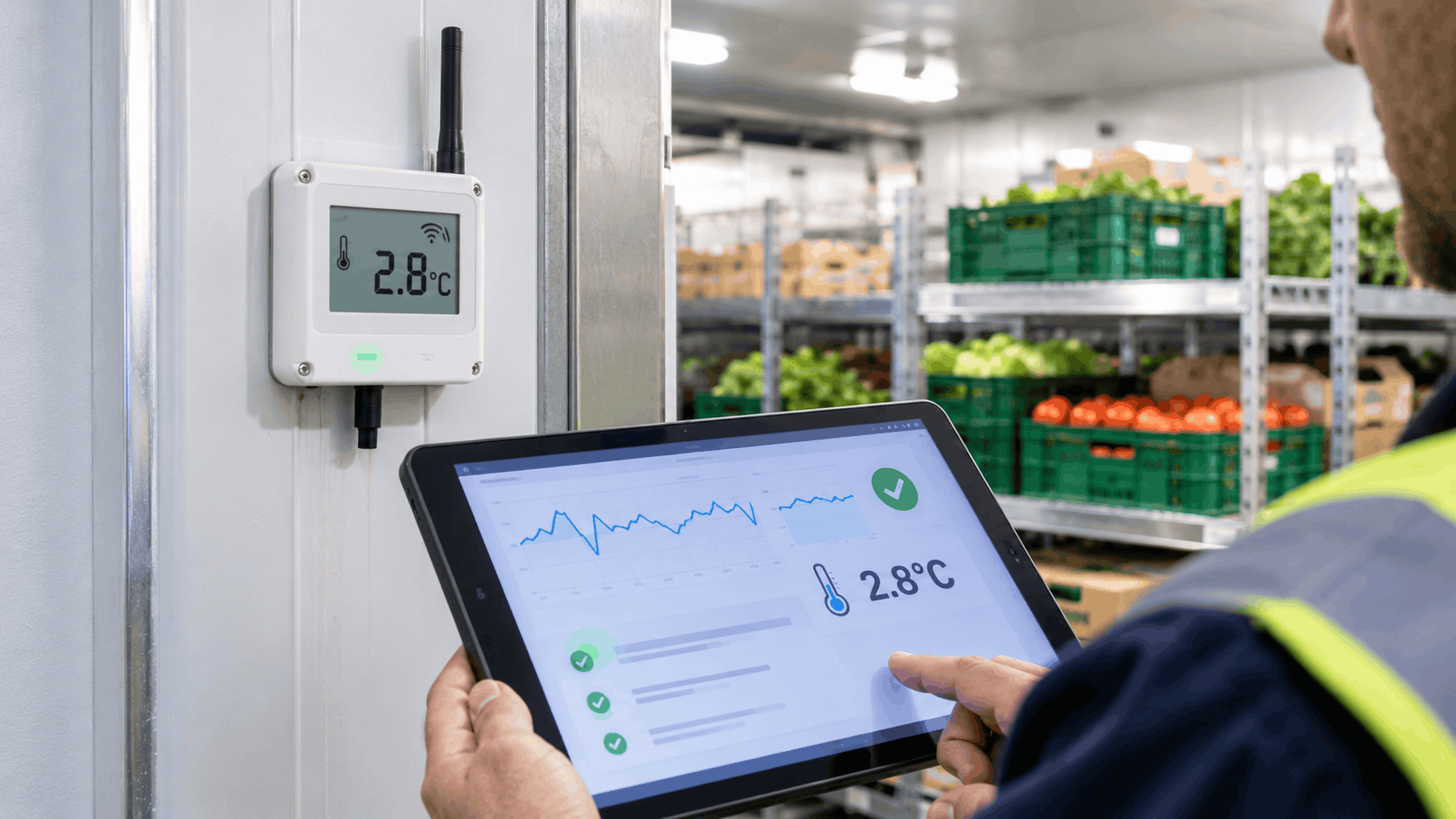
The good news is that keeping an eye on temperatures no longer needs a clipboard and a probe thermometer every few hours. Low-cost wireless sensors, simple alerts and digital records can watch your cold chain 24/7.
Here is a practical way for Adelaide and regional SA food businesses to get started before the hottest weeks arrive.
What Do Food Safety Rules Expect?
Under Standard 3.2.2 of the Food Standards Code, potentially hazardous food must be kept at 5°C or colder, or 60°C or hotter, when it is received, stored, displayed or transported, unless you can show an enforcement officer a safe alternative system.
Cooked food you plan to cool must drop from 60°C to 21°C within two hours, and from 21°C to 5°C within a further four hours.
FSANZ explains these requirements in its temperature control fact sheet.
SA Health's guidance on food processing and potentially hazardous foods lists the foods this covers.
Meat, dairy, seafood, cooked rice and pasta, prepared fruit and vegetables, and anything containing them all count. The guidance stresses minimising time in the 5°C to 60°C "danger zone".
Why Manual Temperature Checks Fall Short in Summer
Manual logs show what the temperature was when someone looked, not what happened in between.
A fridge that warmed to 9°C at 2am and recovered by 6am looks fine on paper. Manual checks also stop over weekends, and paper sheets are hard to search when an auditor asks for six months of records.
For SA food manufacturers, this can make it difficult to identify temperature problems quickly and maintain a complete record of what happened.
A Simple IoT Cold Chain Monitoring Setup
You don't need a full factory overhaul. A sensible first project looks like this:
1. Map Your Critical Points
List every cool room, freezer, blast chiller, receiving dock and delivery vehicle where potentially hazardous food sits. Start with the two or three where a failure would cost the most.
2. Fit Wireless Temperature Sensors
Battery-powered sensors log readings every few minutes and send them over Wi-Fi, LoRaWAN or a mobile network. Add door sensors on cool rooms that get heavy traffic.
3. Set Alert Rules That Suit Your Product
For example, warn the shift lead by SMS if a cool room passes 5°C for 15 minutes, and escalate to the owner if it is still high after 30.
Tuned thresholds avoid alarm fatigue from normal door openings.
4. Track Cooling, Not Just Storage
Probe sensors in batches during cooling show automatically whether each batch met the two-hour and four-hour limits, and flag any batch that didn't.
5. Keep Digital Records
Store every reading, alert and corrective action, such as moved stock, called the technician or discarded batch, in one place.
This means you can pull a report in seconds for an auditor, a customer or your local council's Environmental Health Officer.
Plan for Heatwaves and Power Outages
SA Power Networks notes that extreme weather, including heatwaves and bushfires, can cause unplanned outages. On Total Fire Ban days, network safety settings can make some outages last longer.
Its Have a Power Outage Plan guidance recommends registering for outage notifications. You can add more than one mobile number or email for a business.
Pair that with your own monitoring. Sensors with battery backup and a mobile connection will keep logging and alerting during a blackout, so you know exactly how warm each room got and for how long.
That is the evidence you need to decide what is safe to keep.
Use Temperature Data Beyond Compliance
Once readings are flowing, the same data can show you:
Which compressors run hardest, an early sign of maintenance needs.
Which doors are opened most.
Where energy is being wasted.
Linking temperature records to batch numbers in your ERP or MES also strengthens traceability if you ever need to act on a recall.
For manufacturers exploring Industry 4.0 in South Australia's food sector, temperature monitoring can be a practical starting point for connecting equipment, production data and quality records.
Local Support for Food Manufacturers in South Australia
South Australian businesses have several local resources they can explore when planning improvements to food safety and digital operations.
Manufacturing Growth Accelerator (MGA)
The Department of State Development and Flinders University run the Manufacturing Growth Accelerator at the Flinders Factory of the Future at Tonsley.
Eligible SA SMEs can join information sessions, Industry 4.0 assessments and accelerator projects. Its priorities include worker-centric digital technologies for safety, productivity and quality.
Food South Australia
Food South Australia, the state's peak food and beverage industry body, offers member resources and tools for SA food businesses.
Your Local Council
Environmental Health Officers can advise on food safety requirements, including whether an alternative temperature control system is acceptable.
How StepSharp Helps Food Manufacturers Monitor Their Cold Chain
A temperature alert is most useful when it leads to the right action. For food manufacturers, that means knowing which equipment or batch is affected, who needs to respond and what happened afterwards.
StepSharp helps manufacturers connect IoT monitoring with the systems used to manage production and operations. For cold chain projects, this can include setting up temperature sensors, configuring alerts for critical storage areas and bringing readings into digital production and batch records.
This creates a clearer picture of temperature conditions across the site and makes it easier to review monitoring information alongside production activity. It also provides a foundation for using operational data to identify recurring equipment issues and improve visibility across the plant.
If you are considering a first cold chain monitoring project before summer, talk to the StepSharp team about how IoT, ERP and MES systems could work together in your facility.